
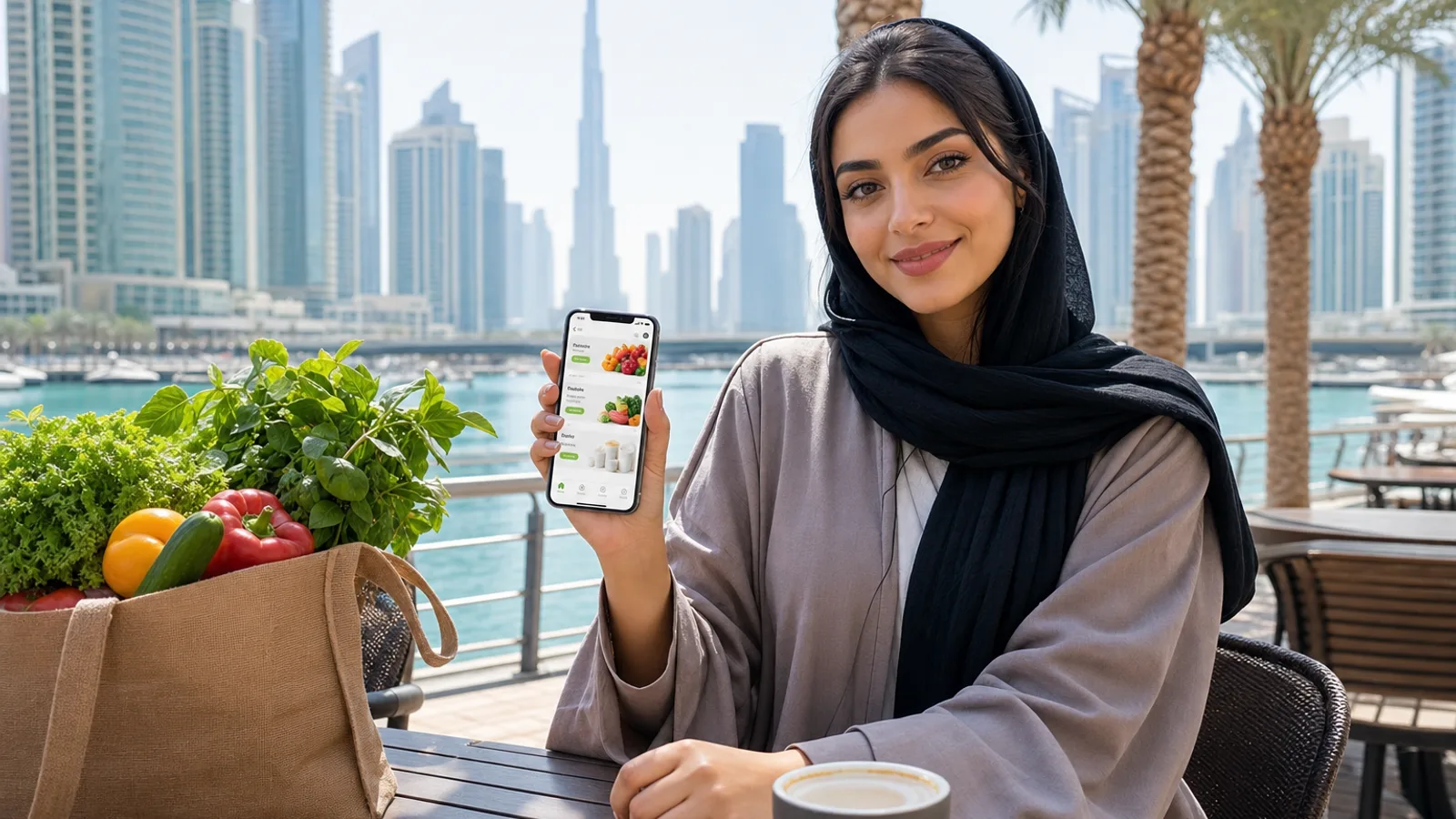
Grocery Delivery App Development In Dubai is becoming a major opportunity for supermarkets, retailers, and startups as customers shift from traditional shopping to mobile-first buying experiences. Busy professionals, families, and premium customers now expect fast delivery, real-time tracking, and personalized shopping.
Dubai’s growing digital economy has increased demand for online grocery apps and hyperlocal delivery platforms. However, building a successful grocery app requires more than a shopping interface. Businesses must plan features, operations, technology, inventory management, and delivery systems carefully.
This guide explains grocery app development costs, essential features, technology choices, development process, and business opportunities in Dubai’s competitive grocery market. Explore our grocery delivery app development company in Dubai services for end-to-end grocery and quick commerce platforms.
Key Takeaways
- Grocery delivery apps in Dubai help retailers build digital sales channels and reach modern customers.
- Development costs range from AED 40,000 to AED 250,000+ based on features and complexity.
- Successful apps require strong inventory, delivery, payment, and customer management systems.
- Custom development improves scalability, flexibility, and long-term business growth.
- AI, quick commerce, and personalized shopping will shape Dubai’s grocery future.
Why Your Business Needs a Grocery Delivery App in Dubai
Dubai has become one of the fastest-growing digital commerce markets in the Middle East. Customers are comfortable using mobile apps for daily needs, including groceries, household items, fresh food, and essential products.
The rise of busy lifestyles is one of the biggest reasons behind the growth of grocery delivery platforms. Many residents prefer ordering groceries from their smartphones instead of spending time visiting supermarkets, especially in high-density business and residential areas.
Locations such as Downtown Dubai, Dubai Marina, Business Bay, Jumeirah, Palm Jumeirah, Deira, and Arabian Ranches have different customer expectations.
For example:
- Customers in Dubai Marina and Palm Jumeirah often expect premium shopping experiences, faster delivery windows, imported products, and smooth app performance.
- Business Bay professionals usually value quick ordering, scheduled delivery, and reliable service during working hours.
- Families in Arabian Ranches may focus more on weekly grocery shopping, bulk orders, and subscription-based delivery.
- Customers in Deira may prefer competitive pricing, multiple product options, and value-based offers.
A well-designed grocery delivery app Dubai solution allows businesses to serve different customer segments while improving operational efficiency.
For supermarkets, an app creates a direct digital sales channel without depending only on physical stores. For startups, it opens opportunities to build a hyperlocal marketplace connecting customers, grocery vendors, and delivery partners.
Modern grocery businesses are also adopting quick commerce models where customers expect delivery within hours or even minutes. This shift has created demand for scalable solutions that combine eCommerce, logistics, inventory management, and customer engagement. Many retailers also pair grocery platforms with food delivery app development and broader on-demand app development capabilities.
Key takeaway: Dubai’s grocery market is not only moving online; it is moving toward faster, smarter, and more personalized digital shopping experiences.
How Does a Grocery Delivery App Work?
A grocery delivery app works as a complete digital ecosystem connecting customers, stores, administrators, and delivery partners.
The process starts when a customer downloads the mobile grocery shopping app and creates an account. Users can browse grocery categories, search products, compare prices, add items to their cart, select delivery slots, and complete payment.
The customer journey usually includes:
User Registration
Customers create accounts using email, phone numbers, or social login options. The app stores preferences, addresses, and previous orders for a smoother experience.
Product Discovery
Users explore categories such as fruits, vegetables, dairy products, beverages, frozen food, household items, and personal care products. Smart search and filtering help customers quickly find products based on brands, price range, availability, or dietary preferences.
Cart and Checkout
Customers review selected products, apply discount codes, choose delivery schedules, and complete payments through integrated payment gateways.
Order Processing
Once an order is confirmed, the store receives the request through the admin dashboard. Staff members check inventory availability, prepare products, and update order status.
Delivery Management
The delivery partner app assigns orders based on location, availability, and delivery routes. GPS navigation helps riders reach customers efficiently.
Order Tracking and Feedback
Customers track deliveries in real time and receive notifications about order preparation, dispatch, and arrival.
Behind the customer app, the store management system handles critical operations such as inventory updates, pricing control, sales reports, and customer data.
The admin panel helps businesses monitor:
- Product availability
- Order volume
- Customer behavior
- Delivery performance
- Revenue reports
- Promotions
One common challenge businesses face during grocery app development is maintaining accurate inventory. Unlike regular eCommerce products, grocery items have frequent stock changes, expiry dates, and demand fluctuations.
A successful Dubai Grocery Delivery App Solution must connect mobile ordering with strong backend operations.
Key takeaway: A grocery app is not just a shopping application. It is a complete retail technology system that manages customers, inventory, payments, and logistics together.
Must-Have Features for a Successful Grocery Delivery App
A successful grocery delivery platform needs features that support customer convenience, store operations, and delivery efficiency. From a product development perspective, businesses should focus on features that solve real customer problems rather than adding unnecessary complexity.
Customer App Features
Easy Registration and Login
A simple onboarding process improves customer adoption. Users should be able to register quickly using phone numbers, email, or social accounts.
Smart Product Search
Grocery apps need powerful search functionality because customers often look for specific brands, quantities, or product types. Features like auto suggestions, voice search, recent searches, and product filters help users complete purchases faster.
Product Categories and Detailed Listings
The app should organize products into clear categories such as fresh groceries, organic products, bakery items, beverages, household supplies, and baby products. Each listing should include images, prices, descriptions, availability, and customer ratings.
Multiple Payment Options
Dubai customers expect flexible payment methods. Apps should support credit and debit cards, digital wallets, online payment gateways, and cash on delivery.
Delivery Scheduling
Customers may need same-day delivery, scheduled delivery, or preferred time slots. Flexible scheduling improves customer satisfaction.
Live Order Tracking
Real-time tracking allows customers to monitor delivery progress through GPS-based updates.
Wishlist and Reorder Options
Many grocery purchases are repetitive. Features like saved lists and one-click reorder help increase repeat purchases.
Ratings and Reviews
Customer feedback improves trust and helps businesses understand product quality and service performance.
Delivery Partner App Features
The delivery application helps riders manage daily operations efficiently. Important features include:
- Order assignment
- GPS navigation
- Delivery route optimization
- Order status updates
- Customer communication
- Earnings dashboard
- Delivery history
Route optimization is especially important in Dubai because traffic conditions can affect delivery times across areas like Sheikh Zayed Road, Downtown Dubai, and Marina districts. A strong delivery system reduces delays and improves operational costs.
Admin Panel Features
The admin dashboard gives businesses complete control over grocery operations.
Inventory Management
Businesses can monitor stock levels, update product availability, manage pricing, and reduce inventory errors.
Sales Reports
Analytics help understand best-selling products, peak ordering hours, customer buying patterns, and revenue performance.
Customer Analytics
Businesses can analyze customer preferences and create better marketing campaigns.
Vendor Management
For marketplace-based grocery apps, vendors can manage their own products, pricing, and availability.
Promotions Management
Admin teams can create discount campaigns, coupon codes, seasonal offers, and loyalty rewards.
Advanced AI Features in On-Demand Grocery App Development
Artificial intelligence is becoming an important part of modern grocery technology.
AI Recommendations
The system suggests products based on previous purchases, browsing behavior, and customer preferences. For example, customers buying coffee regularly may receive recommendations for related products like milk, sugar, or snacks.
Smart Product Suggestions
AI can improve cross-selling by suggesting commonly purchased combinations.
Demand Forecasting
AI-based forecasting helps businesses predict product demand and maintain better inventory levels. This reduces problems like stock shortages and product wastage.
AI Chat Support
AI assistants can answer common customer questions, track orders, and provide instant support.
Personalized Offers
Customer data can help businesses deliver targeted discounts instead of sending general promotions.
Key takeaway: The best grocery apps combine customer convenience, operational control, and intelligent automation to create long-term business value.
Grocery Delivery App Development Cost in Dubai With Timeline
The cost of building a grocery delivery app in Dubai depends on the app’s complexity, required features, technology stack, design quality, and backend infrastructure. A basic grocery app can help businesses test the market, while advanced marketplace solutions require more investment for scalability, automation, and AI capabilities.
The estimated grocery delivery app development cost in Dubai ranges from AED 40,000 to AED 250,000+.
| Grocery App Type | Estimated Cost | Development Timeline | Best For |
|---|---|---|---|
| Basic MVP Grocery App | AED 40,000 - AED 80,000 | 2 - 4 Months | Small grocery stores, local supermarkets, startups testing their grocery delivery idea, businesses launching their first digital channel |
| Medium-Level Grocery Delivery App | AED 80,000 - AED 150,000 | 4 - 6 Months | Growing supermarkets, regional grocery businesses, businesses handling regular online orders and delivery operations |
| Advanced Grocery Marketplace App | AED 150,000 - AED 250,000+ | 6 - 12+ Months | Large supermarket chains, grocery marketplaces, quick commerce startups, businesses planning large-scale expansion |
For related budgeting across product types, also see our mobile app development cost in Dubai guide.
Factors Influencing the Cost of Grocery App Development
Discover the key factors that impact the cost of grocery app development, including features, technology, design, platform, and development complexity.
| Development Factor | How It Impacts Cost |
|---|---|
| Frontend Development | Customer, delivery, and admin interfaces require responsive designs and smooth user experiences across devices. |
| Backend Development | A strong backend manages users, products, orders, payments, inventory, and delivery operations in real time. |
| UI/UX Design | Custom designs, user flows, and shopping experiences increase development effort but improve customer retention. |
| Database Architecture | Grocery apps need reliable databases for product catalogs, customer data, inventory updates, and order history. |
| API Integrations | Payment gateways, Google Maps, notifications, analytics, and third-party services affect overall development complexity. |
| Cloud Infrastructure | Scalable hosting is required to handle increasing users, transactions, and real-time operations. |
| Testing & Maintenance | Quality testing, security checks, updates, and post-launch support are important for long-term performance. |
While estimating the cost to build a mobile app, businesses should consider future growth requirements instead of only focusing on initial development expenses. A scalable grocery platform helps avoid expensive redesigns when order volume, customers, and product inventory increase.
Key takeaway: The right investment depends on your business stage. Startups may begin with an MVP, while established retailers often need advanced grocery marketplace solutions designed for long-term growth.
Technology Stack Recommended by a Grocery App Development Company
Choosing the right technology stack is a critical decision during Grocery Delivery App Development In Dubai. A grocery platform requires multiple technologies to manage customer interactions, product catalogs, inventory updates, delivery operations, payments, and real-time tracking.
Below is a simplified overview of the major technology components used in grocery delivery app development:
| Technology Area | Technologies Used |
|---|---|
| Frontend Development (Customer App & Delivery Partner App) | Flutter, React Native, Native iOS Development |
| Backend Development | Node.js, Python |
| Database Management | MongoDB, PostgreSQL |
| API Development & Integration Layer | REST APIs, GraphQL APIs |
| Cloud Infrastructure & Hosting | AWS, Google Cloud Platform (GCP), Microsoft Azure |
| Payment Integration | Stripe, PayPal, Checkout.com, Razorpay, Apple Pay, Google Pay |
| Maps & Location Services | Google Maps API, GPS Tracking, Route Optimization APIs |
| Push Notifications | Firebase Cloud Messaging (FCM), Apple Push Notification Service (APNs) |
| AI & Machine Learning Capabilities | Python, TensorFlow, Machine Learning Models, Recommendation Engines |
| Analytics & Reporting | Google Analytics, Firebase Analytics, Custom Business Intelligence Dashboards |
| Security Technologies | SSL Encryption, OAuth Authentication, Secure Payment Protocols |
Businesses often work with an experienced mobile app development company in Dubai to choose the right stack for scalability, security, and long-term maintenance.
Step-by-Step Process for Building a Grocery Delivery Application
Building a grocery delivery app requires proper planning because the platform combines retail operations, mobile technology, and logistics management. A common mistake businesses make is starting development without understanding customer behavior, delivery challenges, and operational requirements.
The complete development process usually includes these stages:
Step 1: Market Research and Business Planning
Before development begins, businesses need to understand their target customers and competitors.
Dubai’s grocery market has different customer segments:
- Busy professionals looking for fast delivery
- Families ordering weekly groceries
- Premium customers searching for imported products
- Price-sensitive shoppers looking for discounts
Research helps define target audience, delivery areas, product categories, pricing strategy, and competitor analysis. For example, a grocery app serving Downtown Dubai may focus on convenience and speed, while a family-focused app in Arabian Ranches may prioritize scheduled deliveries and bulk shopping.
Step 2: Planning Features and MVP Strategy
The next step is deciding which features should be included in the first version. A practical MVP may include customer registration, product browsing, cart, checkout, payment integration, order tracking, and admin management.
Experienced teams usually recommend launching essential features first and improving based on customer feedback. Adding every possible feature in the first version increases cost and delays market entry.
Step 3: UI/UX Design
A grocery app needs a simple shopping experience because customers make frequent purchases. The design process includes user journey mapping, wireframes, app prototypes, interface design, and usability testing.
Important design considerations include quick product search, simple checkout, clear product images, and easy reorder options. A complicated checkout process can reduce conversions.
Step 4: Frontend and Backend Development
During development, both mobile interfaces and backend systems are created together. The frontend manages customer interactions, while backend systems handle database operations, inventory control, order processing, user management, and APIs.
Both parts are equally important. A visually attractive app cannot succeed without reliable backend performance. Businesses often work with experienced software development agencies because they need expertise across mobile apps, backend architecture, cloud systems, and security.
Step 5: Testing and Launch
Before launch, the app goes through multiple testing phases: functional testing, performance testing, security testing, payment testing, and user experience testing. Testing helps identify issues related to slow loading, payment failures, order errors, and tracking problems.
Step 6: Maintenance and Business Growth
App development does not end after launch. Successful grocery apps require continuous improvement through new feature updates, security improvements, performance optimization, customer feedback analysis, and marketing campaigns.
From practical implementation experience, businesses that treat the app as a long-term digital channel achieve better results than those viewing it as a one-time project.
Key takeaway: A structured development process reduces risks and helps businesses build a grocery platform that can grow with changing customer needs.
How On-Demand Grocery Delivery App Services Generate Revenue
A grocery delivery app can generate revenue through multiple business models. Choosing the right monetization strategy depends on whether the business operates as a supermarket, marketplace, or quick commerce platform.
Delivery Charges
Businesses can charge customers based on delivery distance, order size, delivery speed, and peak hours. For example, customers may pay additional charges for express delivery in high-demand areas.
Commission Model
Marketplace grocery apps can earn commissions from partner stores. The platform receives a percentage from each completed order. This model works well when multiple grocery vendors sell products through one platform.
Subscription Plans
Subscription models create recurring revenue. Examples include free delivery memberships, premium customer benefits, and exclusive discounts. Subscription programs improve customer retention and repeat orders.
Featured Listings
Grocery stores and brands can pay for better visibility inside the app. Examples include featured products, sponsored categories, and promotional banners.
Brand Advertisements
Large grocery brands can advertise products directly to customers. AI-based targeting helps show relevant offers based on shopping behavior.
Premium Membership
Premium plans may include faster delivery, special discounts, loyalty rewards, and exclusive offers. A strong monetization strategy combines revenue generation with customer value.
Key takeaway: Successful grocery apps do not depend on only delivery fees. Multiple revenue streams create stronger business sustainability.
Why Choose Custom Grocery Delivery App Development?
Every grocery business has different operational needs. A local supermarket, large retail chain, and marketplace startup cannot use the same solution.
Custom grocery app development allows businesses to create technology according to their workflow. Through online ecommerce application development, businesses can build platforms that connect digital shopping with their existing retail operations.
A customized solution provides:
Better Business Control
Businesses can control product management, pricing, customer experience, promotions, and delivery operations.
Business-Specific Features
Custom solutions can include features based on company requirements, such as loyalty programs, subscription deliveries, multi-store management, and warehouse integration.
Scalability
A ready-made solution may work initially but can create limitations when businesses grow. With tailored software development, companies can build systems that support more customers, products, and transactions.
Better Customer Experience
A customized app can provide personalized recommendations, faster ordering, and smoother shopping journeys. Professional custom software development partners help businesses create applications that match their long-term digital commerce goals.
Key takeaway: Custom development gives grocery businesses flexibility, control, and the ability to build a competitive digital brand.
How to Choose the Right Grocery Delivery App Development Partner in Dubai?
Choosing the right development partner directly impacts the success of a grocery platform.
Businesses should evaluate:
Previous Experience
Review whether the company has experience building grocery apps, eCommerce platforms, marketplace solutions, and delivery systems.
Technical Expertise
A reliable partner should understand mobile development, backend architecture, cloud infrastructure, APIs, database management, and security practices.
Understanding of Dubai Market
Dubai has unique requirements related to customer expectations, delivery locations, payment preferences, and quick commerce trends.
Portfolio and Case Studies
A strong portfolio shows practical development capabilities.
Post-Launch Support
Apps require updates, maintenance, and improvements after launch. Businesses should choose partners offering complete web app development services along with mobile and backend expertise.
The ideal partner understands both technology and grocery operations.
Key takeaway: The best development partner acts as a technology advisor, not just a coding provider.
Future Trends of Grocery Delivery Apps in Dubai
Dubai’s grocery delivery market is moving toward faster and smarter experiences.
Future trends include:
- AI shopping assistants that help customers select products
- Quick commerce platforms offering ultra-fast delivery
- Smart inventory systems predicting demand
- Voice-based grocery ordering
- Personalized shopping recommendations
- Automated warehouse operations
Businesses that adopt these technologies early can improve efficiency and customer loyalty.
Conclusion
Grocery Delivery App Development In Dubai offers businesses a strong opportunity to build digital grocery channels and improve customer convenience. The right solution requires careful planning, scalable technology, strong features, and efficient delivery operations.
With development costs ranging from AED 40,000 to AED 250,000+, businesses can choose an approach based on their growth stage. A well-built grocery app can help supermarkets, startups, and retailers create better customer experiences and long-term digital value.
Frequently Asked Questions
1. How much does grocery delivery app development cost in Dubai?
The cost of a grocery delivery app in Dubai ranges from AED 40,000 to AED 250,000+, depending on features, design, technology, integrations, and scalability requirements.
2. How long does it take to build a grocery delivery app in Dubai?
A grocery delivery app usually takes 2 to 12 months to develop. The timeline depends on app complexity, features, backend systems, and testing requirements.
3. What features are required in a grocery delivery app?
Essential features include product search, shopping cart, payment options, order tracking, inventory management, delivery partner app, analytics, and customer notifications.
4. Can I build an app like Instacart in Dubai?
Yes, businesses can build an Instacart-style grocery marketplace with customer apps, vendor management, delivery tracking, payments, and scalable backend infrastructure.
5. Which technology is best for grocery delivery app development?
Flutter, React Native, Node.js, Python, MongoDB, PostgreSQL, and cloud platforms are commonly used based on business goals and scalability needs.
6. How do grocery delivery apps make money?
Grocery apps generate revenue through delivery charges, vendor commissions, subscriptions, featured listings, advertisements, and premium membership plans.
7. Why should grocery businesses invest in a custom app?
Custom grocery apps provide better control, personalized features, scalability, improved customer experience, and solutions designed around specific business operations.
8. How can I choose the right grocery app development company in Dubai?
Choose a company with grocery app experience, strong technical skills, Dubai market understanding, security practices, and reliable post-launch support.