
Case Study
Hospital Information System
A connected hospital platform that brings patient care, clinical workflows and administrative operations into one system.
- 8 MonthsDelivery Timeline
- 15 MembersProject Team
- 4 PlatformsConnected Interfaces


Project Overview
Hospital Information Management Systems is a UAE healthcare platform designed to connect patients, doctors, nurses, reception teams, billing staff and hospital administrators through one structured system. Patients can manage profiles, request appointments, review relevant records and receive hospital updates, while doctors can manage schedules, patient information and clinical activities through dedicated interfaces. Hospital teams can coordinate admissions, appointments, billing, departments and operational tasks from a central dashboard. Techanic Infotech designed the platform around the practical needs of busy UAE healthcare facilities, where patient information, appointment schedules and administrative workflows need to remain accurate, accessible and controlled across different departments.
Project Idea
The business idea was to bring core hospital workflows into one connected information system. The operator needed a digital foundation that could support patient registration, appointments, doctor activity, billing and administrative work without forcing departments to depend on disconnected records.
Hospital operations involve many teams working on the same patient journey. Reception staff may create an appointment, doctors need relevant patient information, billing teams manage charges and administrators monitor activity across departments. When these processes are separated, staff spend more time checking information and resolving inconsistencies between records.
Techanic Infotech connected patient profiles, appointments, doctor schedules, clinical workflows and administrative records through a shared platform. Each role received access to the information and actions relevant to its responsibilities, while authorised administrators gained a broader view across departments. This created a clearer flow from patient registration through consultation, billing and follow up.
The product principle focused on accuracy, accessibility and control. Patients needed clear information about appointments and hospital services, clinical teams needed dependable patient context and administrators needed visibility across operations. The system was designed to support structured healthcare workflows while keeping access to sensitive information appropriately controlled.
Challenges
The platform had to support patients with different levels of familiarity with digital healthcare services. A first time patient might only need to register and request an appointment, while a returning patient could have several appointments and existing records. Hospital staff also needed efficient workflows for registration and scheduling, making the interface simple for patients while remaining practical for busy reception teams.
Patient information varies according to the care being provided. Basic registration details may be enough for an appointment, while doctors may require consultation notes, medical history, reports or supporting documents. Techanic Infotech structured the information model so different departments could work with relevant patient data while keeping access based on user roles and operational responsibilities.
Hospital activity can increase sharply during morning consultations, evening clinics and seasonal periods. Several departments may update appointments, patient records and billing information at the same time. The system needed responsive search, appointment management and dashboard activity while maintaining consistent records across departments and handling changes without creating conflicting information.

Project Milestones We Achieved
| Milestone | Tasks | Timeline | Responsible |
|---|---|---|---|
| Project Discovery and Planning | Mapped hospital workflows, defined department roles, documented patient journeys, reviewed information requirements and prioritised core system modules | Month 1 | Business Analyst and Project Manager |
| UI UX Design | Designed patient journeys, doctor screens, appointment flows, department views and hospital administration dashboard interactions | Month 2 | UI UX Designer and Product Designer |
| Core Development | Built mobile applications, backend services, patient records, appointment management, doctor workflows and administrative modules | Month 3 to 5 | Flutter Developer and Backend Developer |
| Integrations and Testing | Connected notifications, payment services and cloud infrastructure, then tested patient, appointment, billing and role based workflows | Month 6 to 7 | QA Engineer and DevOps Engineer |
| Launch and Optimization | Prepared production release, supported department onboarding, reviewed operational behaviour and refined hospital information workflows | Month 8 | Project Manager and DevOps Engineer |
Project Features
The system was structured around the complete hospital journey, from patient registration and appointment booking through consultation and administrative follow up. Each department receives focused tools while shared information helps authorised teams work from the same patient and operational records.
Patient Signup and Profile
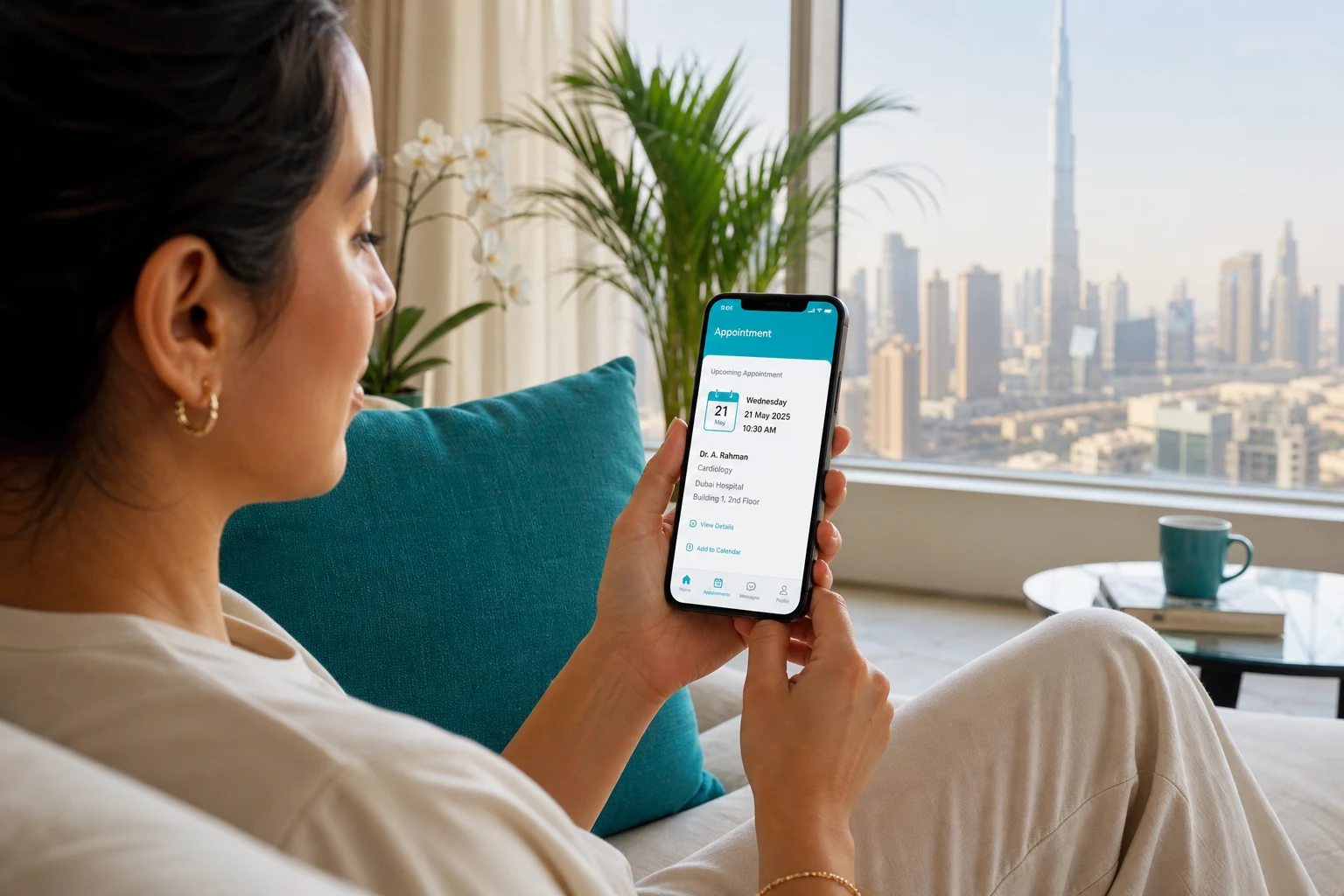
Patients can create profiles, manage contact details, maintain relevant personal information and access supported hospital services through one account.
Appointment and Service Booking
Patients can browse available hospital services, select doctors or departments, choose suitable appointment slots and submit booking requests through one guided flow.
Patient Record Tracking
Authorised users can review relevant patient information, appointment history and care updates, helping clinical and administrative teams maintain better continuity.
Doctor Assignment
Hospital teams can assign doctors to appointments and care activities based on department, speciality, schedule and operational availability.
Hospital Management Dashboard
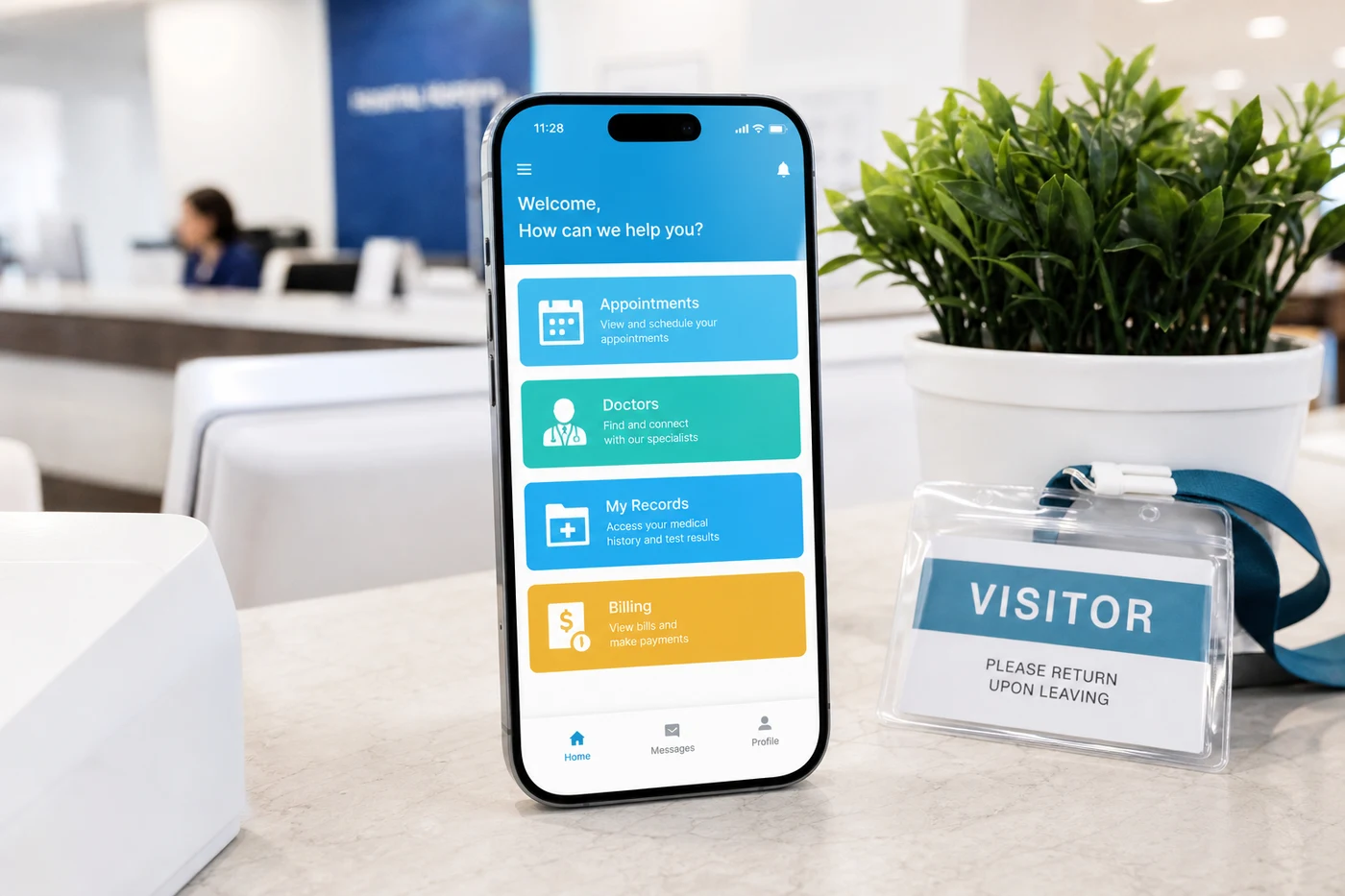
Administrators can manage patients, doctors, departments, appointments, billing activity and hospital operations through one central dashboard with role based controls.
Medical History and Follow Up
Patients can access supported appointment history and follow up information, while authorised care teams can maintain relevant records for future consultations.
Results
Techanic Infotech delivered a connected hospital information platform across Android, iOS and Web, bringing patient management, appointments, doctor workflows, billing and administration into one structured system. The platform gives the UAE healthcare operator a common digital foundation for coordinating activity across departments.
Hospital teams gained a central operational view of patients, appointments, doctors and administrative activity. Reception teams could manage bookings more consistently, doctors could access relevant patient information and administrators could monitor activity across departments without relying entirely on separate spreadsheets or manual records.
Patients gained a clearer route for registration, appointment management and hospital communication. Doctors and care teams received more structured patient context, while administrative staff could work from shared information when handling scheduling, billing and follow up activities. This helped reduce unnecessary duplication across routine hospital workflows.
The platform provides a foundation for expanding hospital services and departments within the existing architecture. Additional specialties, facilities, staff roles, patient services and administrative workflows can be introduced without rebuilding the core system, allowing the operator to extend its digital healthcare operations across the UAE.

Development Process
Explore
- UAE healthcare behaviour
- Patient service needs
- Hospital workflow analysis
- Patient journey mapping
- Department flow planning
- Role access structure
Implement
- Simple patient navigation
- Clear appointment views
- Focused staff actions
- Healthcare backend services
- Mobile application builds
- Hospital dashboard
Execute
- Patient scenario testing
- Access control validation
- Appointment workflow checks
- Production readiness checks
- Department onboarding support
- Hospital activity monitoring
Typography & colors
Open Sans
ABCDEFGHIJKLMNOPQRSTUVWXYZ
abcdefghijklmnopqrstuvwxyz
1234567890
Primary
#0E7490
Secondary
#22D3EE
Tertiary Color
#CFFAFE
Icons Color
#164E63
Text Color
#ffffff
Background Color
#ffffff
App Visuals
Dr Amira Hassan
Cardiology · DHCCFollow up
In 2 weeksStay up to date with hospital alerts
Hospital
Appointments waiting today
You are almost there
Tech Stack
The technology stack was selected to support high traffic patient search, fast appointment workflows, structured medical information and a consistent mobile and web experience. Flutter powered the mobile applications, NestJS handled backend services, MongoDB supported patient and hospital data, Redis helped with frequently accessed appointment information, and AWS provided the cloud infrastructure for deployment and scaling.
- Flutter
- NestJS
- MongoDB
- Redis
- AWS
Have an Idea for a Scalable Platform?
Techanic Infotech can build healthcare systems around patients, clinicians, departments and complex hospital operations.
Talk to Our Experts