
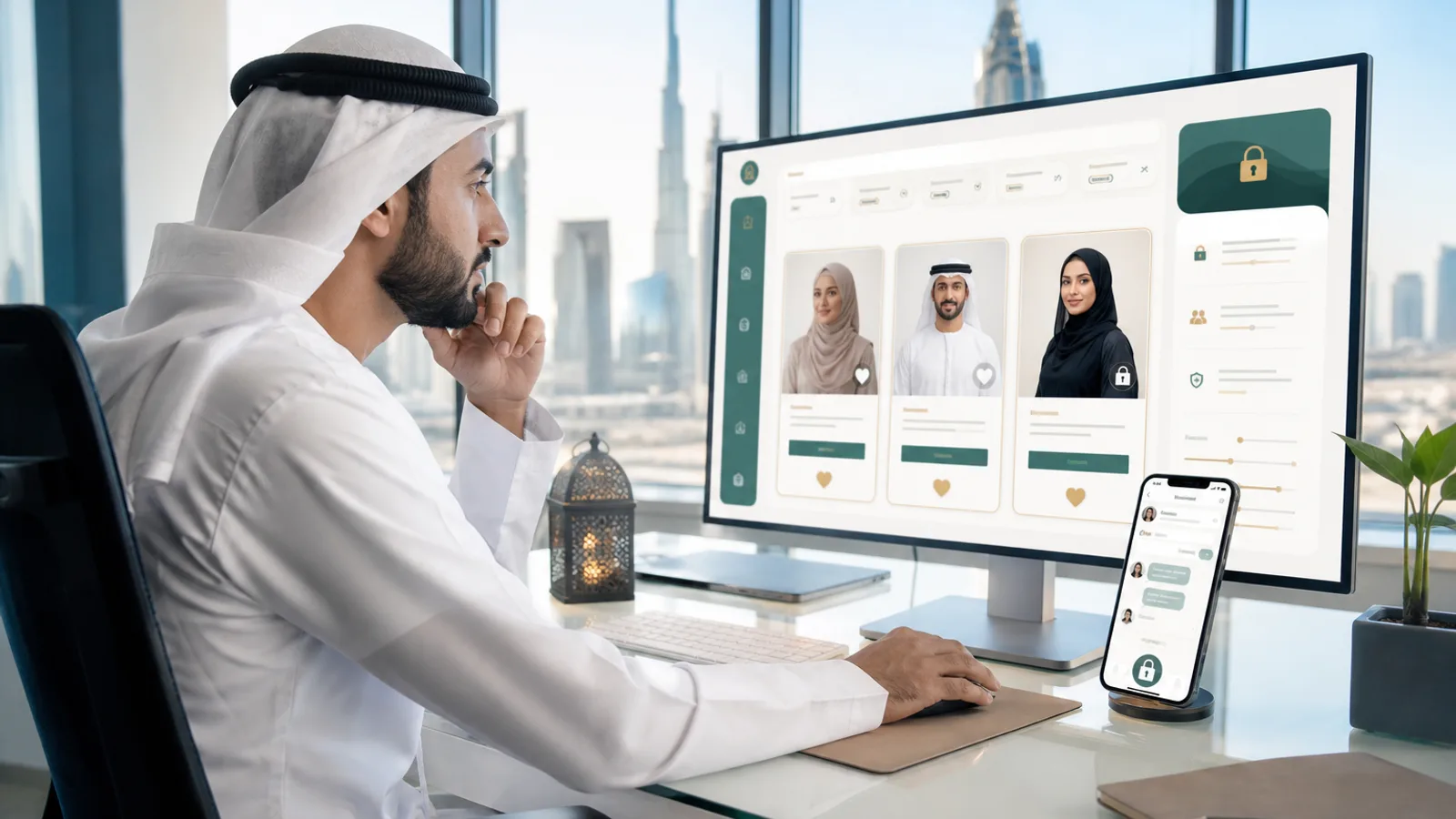
The UAE's growing digital landscape has created strong demand for niche dating platforms that respect cultural and religious values, particularly among the region's Muslim population seeking meaningful, marriage-focused connections.
Unlike mainstream dating apps, Muslim dating apps prioritize halal interaction guidelines, family involvement features, and privacy-centric designs that align with Islamic principles around courtship and relationships.
As more Muslims across the UAE and wider Gulf region turn to technology for matchmaking, businesses see significant opportunity in building culturally sensitive, feature-rich platforms tailored to this audience.
This guide explores everything you need to know about Muslim dating app development in the UAE, covering essential features, development costs, and the step-by-step process required to build a secure, respectful, and successful matchmaking platform.
Key Takeaways
- Muslim dating apps succeed by blending Islamic values with modern matchmaking technology, prioritizing marriage focused intentions over casual dating interactions common on mainstream platforms.
- Essential features like guardian involvement, privacy controls, and values-based matching algorithms build trust and align the platform with cultural and religious expectations.
- Development costs typically range from AED 20,000 to AED 150,000+, depending on complexity, security features, and the sophistication of matching and guardian functionalities.
- Robust identity verification and privacy protections, including profile locking and screenshot blocking, address genuine safety concerns unique to this user base.
- Partnering with experienced developers familiar with both technology and Islamic courtship principles ensures the app resonates authentically with practicing Muslim users seeking serious relationships.
Why Muslim Dating Apps Are in Demand in the UAE?
Muslim dating apps are gaining strong traction across the UAE, blending faith-based values with modern matchmaking technology.
Leveraging AI development services in Dubai helps businesses build culturally sensitive, secure platforms that connect practicing Muslims seeking meaningful, marriage-focused relationships.
Growing Preference for Faith-Based Matchmaking
The UAE's Muslim population increasingly seeks platforms respecting Islamic values around courtship and marriage.
Apps offering features like guardian involvement and modesty-focused interactions address genuine cultural needs that mainstream dating platforms fail to accommodate for practicing Muslim users effectively.
Rising Smartphone Adoption Among Expatriate Communities
The UAE's large expatriate Muslim population increasingly relies on smartphones for social connections and matchmaking.
This growing digital dependency creates strong demand for niche apps catering specifically to diverse Muslim communities seeking culturally aligned, faith-based relationship platforms.
Demand for Privacy and Safety-Focused Features
Muslim users often prioritize discretion, family involvement, and identity verification over casual, photo-centric dating experiences.
Apps offering profile locking, chaperone modes, and screenshot blocking address genuine safety concerns, making them more appealing than generic mainstream dating alternatives.
Must-Have Features for a Successful Muslim Dating App
Building a successful Muslim dating app requires balancing modern matchmaking technology with Islamic values and cultural sensitivity.
Partnering with an experienced mobile app development company in Dubai ensures your platform includes essential features that respect religious principles while delivering a safe, engaging user experience.
1. Wali or Guardian Involvement Feature
Allowing family members or guardians to monitor conversations and approve matches respects Islamic courtship traditions.
This feature builds trust with users and families, ensuring interactions remain respectful and aligned with cultural expectations around chaperoned communication before marriage discussions begin.
2. Advanced Privacy and Profile Locking
Users need control over who views their profile, photos, and personal information.
Features like profile locking, screenshot blocking, and selective visibility protect user privacy and discretion, addressing genuine safety concerns common among practicing Muslims seeking respectful matchmaking experiences.
3. Faith and Values-Based Matching Algorithm
Beyond basic demographics, the matching system should consider religious practice level, sect, prayer habits, and lifestyle preferences.
Partnering with an experienced dating app development company in Dubai ensures this matching engine goes deeper than surface-level attraction, connecting users based on shared values essential for long-term marriage compatibility.
4. Scalable and Secure Backend Architecture
Reliable custom software development in Dubai ensures the app operates on secure, scalable infrastructure that protects sensitive user data.
This architecture supports encrypted messaging, identity verification, and growing user bases without compromising performance or security standards.
5. Identity Verification and Fake Profile Detection
Implementing robust verification processes, including photo verification and identity checks, reduces fake profiles and catfishing risks.
This builds user trust and safety, particularly important for marriage-focused platforms where users share personal information and intentions seriously.
6. Marriage-Focused Intention and Profile Fields
Unlike casual dating apps, profiles should include fields specifically addressing marriage intentions, family background, and long-term relationship goals.
This ensures users connect with serious intent, filtering out casual daters and aligning the platform with its marriage-oriented purpose.
Step-by-Step Process to Develop a Muslim Dating App in the UAE
Developing a successful Muslim dating app requires careful planning across multiple stages, from research to deployment.
Partnering with an experienced web app development company in Dubai ensures your platform is built securely, respects cultural values, and delivers a meaningful matchmaking experience for users.
1. Define Your Target Audience and Niche
Begin by identifying whether your app targets specific regions, sects, or age groups within the Muslim community.
Clarifying your niche early shapes feature priorities, cultural considerations, and marketing strategy, ensuring the app resonates with your intended user base effectively.
2. Conduct Market and Competitor Research
Analyze existing Muslim dating platforms like Muzz and Salams to identify gaps, user pain points, and differentiation opportunities.
This research ensures your app delivers genuine value, addressing unmet needs better than established competitors already serving the market.
3. Design Culturally Sensitive User Flows
Mapping out registration, matching, and communication flows that respect Islamic courtship principles ensures the app feels authentic and trustworthy.
Thoughtful design incorporating guardian involvement and modesty-focused interactions builds credibility among practicing Muslim users seeking serious relationships.
4. Choose the Right Technology Stack
Similar to eCommerce app development in Dubai, selecting appropriate databases, cloud infrastructure, and programming languages impacts scalability and security.
This decision should balance current requirements with future growth projections, ensuring the architecture supports expanding user bases effectively.
5. Develop Core Matching Algorithm
Building a values-based matching system that considers religious practice, sect, and lifestyle preferences forms the foundation of your app.
This algorithm should prioritize compatibility factors relevant to marriage-focused connections rather than surface-level attraction alone.
6. Implement Privacy and Security Features
Integrating profile locking, screenshot blocking, and identity verification protects user data and builds trust.
These security measures address genuine concerns among Muslim users regarding discretion, safety, and protection from fake profiles or inappropriate interactions on the platform.
7. Integrate Guardian and Chaperone Functionality
Partnering with an experienced custom software development company in Dubai helps build guardian involvement features allowing family members to monitor conversations.
This functionality respects cultural courtship traditions while ensuring transparent, family-approved interactions between potential matches.
8. Conduct Rigorous Testing and Quality Assurance
Comprehensive testing across devices, security scenarios, and user flows identifies bugs before launch.
This includes testing privacy features, verification systems, and matching algorithms to ensure reliable performance under real-world conditions and diverse user interactions.
9. Launch and Gather User Feedback
Deploying the app across app stores requires careful monitoring of initial user behavior and community feedback.
Gathering reviews and analytics data helps identify improvement areas, allowing continuous refinement of features based on genuine user experiences and needs.
10. Scale and Add Advanced Features
Many developers choose Flutter app development in Dubai for cross-platform scalability, allowing simultaneous iOS and Android updates.
Post-launch, adding features like video calls, compatibility tests, and premium subscriptions helps the app grow and retain users long-term.
Muslim Dating App Development Cost Breakdown in UAE
Muslim dating app development cost in the UAE typically ranges from AED 20,000 to AED 150,000+, depending on complexity and features.
Understanding custom software development cost in Dubai helps businesses budget accurately for a secure, culturally sensitive platform.
| Feature/Stage | Description | Cost Range (AED) |
|---|---|---|
| Discovery and Planning | Market research and requirements gathering | 3000-4500 |
| UI and UX Design | Wireframes and culturally sensitive interface design | 6000-9000 |
| Backend Architecture | Database setup and secure API development | 12000-18000 |
| Matching Algorithm Development | Values-based compatibility matching system | 10000-15000 |
| Guardian and Chaperone Features | Family involvement and monitoring functionality | 8000-12000 |
| Privacy and Security Features | Profile locking, encryption, identity verification | 9000-14000 |
| iOS and Android Development | Native app builds for both platforms | 20000-30000 |
| Payment and Subscription Integration | Premium plans and secure payment gateway | 7000-11000 |
| Testing and Quality Assurance | Security testing and user acceptance testing | 6000-9000 |
| Post Launch Support and Maintenance | Monthly updates, bug fixes, and scaling | 5000-8000 |
Final Thoughts
Developing a successful Muslim dating app in the UAE requires thoughtful balance between modern technology and Islamic values, creating a platform that respects cultural sensitivities while delivering meaningful matchmaking experiences.
From guardian involvement features and privacy-focused design to values-based matching algorithms, every element must prioritize trust, safety, and genuine marriage-oriented connections over casual interactions.
As the region's Muslim population increasingly turns to digital platforms for faith-aligned matchmaking, businesses that invest in culturally authentic, secure applications position themselves for meaningful growth in this underserved niche.
Partnering with experienced developers who understand both technical requirements and Islamic courtship principles ensures your app resonates with users, builds lasting trust, and successfully connects practicing Muslims seeking serious, marriage-focused relationships across the UAE.
Frequently Asked Questions
1. What makes a Muslim dating app different from mainstream dating apps?
Muslim dating apps prioritize marriage focused intentions, guardian involvement, and features aligned with Islamic values. Unlike casual dating platforms, they emphasize modesty and serious courtship rather than surface-level attraction or casual connections.
2. How much does it cost to develop a Muslim dating app in the UAE?
Costs typically range from AED 20,000 for basic MVP versions to AED 150,000 or more for fully featured apps with advanced matching algorithms, guardian features, and premium subscription systems, depending on complexity.
3. What is a wali or guardian feature in Muslim dating apps?
This feature allows a family member or guardian to monitor conversations and approve potential matches, respecting Islamic courtship traditions.
4. How long does it take to develop a Muslim dating app?
Development timelines typically range from four to nine months, depending on feature complexity, matching algorithm sophistication, and required integrations.
5. Are Muslim dating apps considered halal?
Whether a platform is considered halal depends on its design and features, not the technology itself. Apps incorporating guardian involvement and marriage focused intentions align more closely with Islamic principles than casual dating platforms.
6. What privacy features are essential for a Muslim dating app?
Essential features include profile locking, screenshot blocking, and selective visibility controls. These protect user discretion and safety, addressing genuine concerns among Muslim users regarding privacy and appropriateness.
7. Can users filter matches based on religious practice level?
Yes, effective Muslim dating apps allow users to filter potential matches based on religious practice, sect, prayer habits, and lifestyle preferences.
8. Should I build for iOS, Android, or both platforms?
Building for both platforms maximizes reach but increases development costs. Many businesses use cross-platform frameworks like Flutter to launch simultaneously on iOS and Android while reducing overall development time and expenses.
9. How do Muslim dating apps prevent fake profiles?
Robust identity verification processes, including photo verification and document checks, help reduce fake profiles and catfishing risks.
10. What ongoing costs should I expect after launching the app?
Post launch expenses include server hosting, security updates, bug fixes, monthly maintenance, and feature enhancements.